
 English
 Español
 Portugues
 Pусский
 Français
 ไทย
ไทย Türk dili
 Indonesia
 Tiếng Việt


Photovoltaic cable
A photovoltaic (PV) cable is a specialized electrical cable designed specifically for the interconnection of various components within photovoltaic power systems, such as solar panels, inverters, and combiner boxes. Its primary function is to safely and efficiently transport the direct current (DC) electricity generated by solar modules to other parts of the system, ensuring minimal power loss and maximum system performance. Due to the outdoor and frequently harsh environment in which photovoltaic cables are deployed, they possess unique structural and physical characteristics that distinguish them from conventional electrical wires.One of the defining features of PV cables is their resistance to ultraviolet (UV) radiation. As they are often exposed to direct sunlight over long periods, their insulation and sheathing materials—typically cross-linked polyethylene (XLPE) or ethylene propylene rubber (EPR)—are engineered to withstand UV degradation, which can cause brittleness or cracking. In addition to UV resistance, photovoltaic cables are designed to be weatherproof, remaining functional in a wide temperature range, often from -40°C up to +90°C continuously, with short-term peaks up to +120°C.PV cables are also required to possess excellent flexibility and abrasion resistance. This flexibility facilitates easy installation, especially in rooftop or ground-mounted solar schemes where the cables must be routed through tight spaces and along irregular surfaces. Their robust mechanical strength helps prevent damage from external factors such as rodents, abrasion, or mechanical stress from wind and snow.Another important aspect of photovoltaic cables is their electrical safety. These cables are often double-insulated for enhanced protection, minimizing risks of fire, electrical leakage, or shorts. They must also support high voltages in DC circuits—ratings of 600V, 1000V, or even 1500V DC are common in newer installations. The insulation is typically halogen-free and flame-retardant to ensure reduced toxic emissions and enhanced safety in case of fire.Furthermore, the copper conductors inside PV cables are usually finely stranded and tinned, which provides better conductivity and corrosion resistance. This is particularly important in humid or saline environments where corrosion could otherwise compromise electrical performance and safety. The cables are also designed to be compatible with various PV connectors, such as MC4 types, ensuring secure and reliable connections.In summary, photovoltaic cables are critical to the safe and efficient operation of solar energy systems. Their specialized construction ensures durability, electrical integrity, and safety, making them an indispensable component in the ever-growing renewable energy sector.
نتاج
تصنيف:
كابل الطاقة الشمسية
-
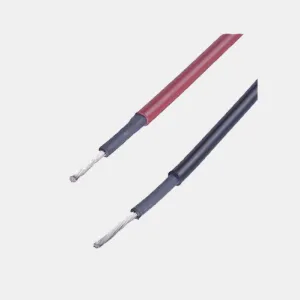
كابل الطاقة الشمسية PV1 F
تصنيفها: كابل الطاقة الشمسيةالمشاهدات: 277عدد:وقت الإصدار: 2025-02-18 10:22:52خصائص كابل الطاقة الشمسية الكهروضوئيةطلب:يتم استخدام الكابل الشمسي PV-F في توليد الطاقة الكهروضوئية ونظام الطاقة الشمسية ، وترابط الألواح الشمسية والمكونات الكهربائية في النظام الكهروضوئي. الحجم من 1.5 مم 2 إلى 1220 مم ، مناسب للبيئات القصوى في الهواء الطلق ، الأشعة فوق البنفسجية ، الأوزون ، مقاومة للتحلل المائي.معيار:كابل الطاقة الشمسية الكهروضوئية المعتمدة من TUV معتمد وفقًا لـ EN 50618: 2014ميزات المنتج:مثبطات اللهب ، الطقس/مقاوم للأشعة فوق البنفسجية ، مقاومة للأوزون ، من الدرجة الجيدة ومقاومة التآكلبناء الكابلات:الموصل: موصل النحاس ذو الأسلاك الدقيقة وفقًا لـ BS EN 50618 CL. 5.العزل: مقاوم... -
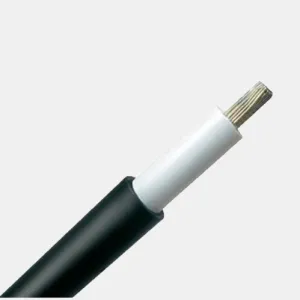
كابل الطاقة الشمسية pv1- f 16mm
تصنيفها: كابل الطاقة الشمسيةالمشاهدات: 332عدد:وقت الإصدار: 2025-02-18 10:25:39خصائص الكابل الشمسي 16 ممطلب:يتم تطبيق كابل الطاقة الشمسية PV-F 16mm على الألواح الشمسية لتوليد الطاقة والمكونات ذات الصلة للأسلاك ، والاتصال ، بشكل خاص للهواء في الهواء الطلق. مقاومة أشعة الشمس ، مضادة للشيخوخة ، باستخدام مواد مثبطات اللهب الخالية من الدخان الخالية من الدخان ، درجة أعلى ، المزيد من السلامة.معيار:تم تكييفه مع الأنظمة الكهروضوئية ، 2 PFG 1169 / 08.2007 و EN 50618: 2015.المعلمات الكهربائية:تصنيف الجهد: AC 0.6 / 1.0 كيلو فولت كحد أقصى. PV - جهد النظام: DC حتى 2.0 كيلو فولت ممكنة كحد أقصى. جهد التشغيل المسموح به في أنظمة التيار المتردد: 0.7 / 1.2 كيلو فولت كحد أقصى. جهد التشغيل ال... -
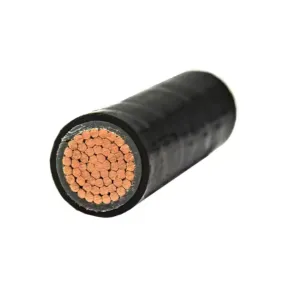
N2xh-J N2xh-O 0.6/1kv Halogen-Free Flame Retardant Copper Multi Core 1X240 mm2 Photovoltaic Cable 16A Rated Current Pure Copper
تصنيفها: كابل الجهد المنخفضالمشاهدات: 285عدد:وقت الإصدار: 2025-07-21 05:43:29The N2XH-J/N2XH-O series 0.6/1kV halogen-free flame retardant photovoltaic cable features pure copper conductor (240mm²) with 16A rated current. Specially designed for PV systems, it offers excellent weather resistance, UV protection and flame retardant properties, suitable for DC-side power transmission in solar plants. With international certifications, this cable ensures long-term reliable performance in harsh environments, providing safe power connection solutions for photovoltaic systems. -
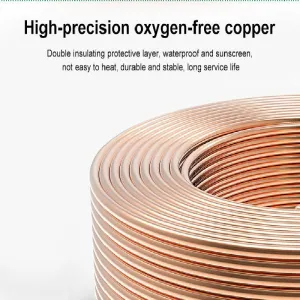
TÜV Certified EN 50618 Photovoltaic Cable | H1z2z2-K PV1-F 1800VDC for Solar Systems | 4mm²
تصنيفها: كابل الطاقة الشمسيةالمشاهدات: 419عدد:وقت الإصدار: 2025-08-27 09:01:50The TÜV Certified EN 50618 Photovoltaic Cable (model H1z2z2-K PV1-F, rated voltage 1800VDC, conductor cross-sectional area 4mm²) is a core power transmission component specially designed for solar power generation systems. Relying on strict certification standards, accurate specification matching, and excellent environmental adaptability, it has become a reliable choice for power transmission between key equipment such as modules, inverters, and combiner boxes in photovoltaic power plants. This cable not only has passed the authoritative certification of TÜV (Germany) and fully complies with the EU EN 50618 dedicated standard for photovoltaic cables but also achieves comprehensive optimization in electrical performance, weather resistance, temperature resistance, etc., providing key guarantees for the long-term stable operation of solar systems. In terms of core specifications and certification, "TÜV Certification" means the cable has undergone strict testing by the German Technical Supervision Association (TÜV), covering multiple indicators such as electrical safety, mechanical strength, and environmental tolerance, ensuring product quality reaches the international top level; "EN 50618" is an exclusive standard formulated by the EU for photovoltaic cables, which clearly stipulates the usage requirements of cables in photovoltaic systems, including conductor materials, insulation layer performance, UV radiation resistance, ozone aging resistance and other key parameters, and is the core basis for cables to adapt to photovoltaic scenarios. The model "H1z2z2-K" defines the special performance of the cable: "H" indicates resistance to high-frequency voltage, "1z2z2" represents a double-layer flame-retardant structure (passing the single vertical burning test, no drips in the flame, and low-smoke halogen-free characteristics that can reduce the release of harmful substances during fire), and "K" indicates that the cable has a certain degree of flexibility, which is convenient for bending and arranging in the complex installation environment of photovoltaic power plants. "PV1-F" is a common model identifier for photovoltaic cables, specifically referring to single-core insulated cables suitable for photovoltaic systems; "1800VDC" is the rated DC voltage, which adapts to the high-voltage output demand after series connection of current mainstream photovoltaic modules (avoiding transmission loss caused by insufficient voltage); the conductor cross-sectional area of "4mm²" accurately matches the current transmission demand of small and medium-sized photovoltaic arrays, and can stably carry 32A-38A current under rated working conditions (slightly different according to different ambient temperatures), which not only ensures power transmission efficiency but also avoids installation inconvenience and cost waste caused by overly thick conductors. In terms of material selection, the cable conductor is made of high-purity electrolytic copper through a multi-strand fine stranding process. High-purity copper has excellent electrical conductivity (conductor DC resistance ≤4.61Ω/km at 20℃), which can effectively reduce power loss during current transmission and improve the overall power generation efficiency of the photovoltaic system; the stranded structure enhances the flexibility of the conductor, which can adapt to the bending needs of different installation scenarios such as photovoltaic power plant roofs and ground, and at the same time improves the fatigue resistance of the conductor, avoiding conductor breakage caused by thermal expansion and contraction during long-term outdoor use. Both the insulation layer and the sheath layer are made of weather-resistant cross-linked polyethylene (XLPE) or radiation-cross-linked polyolefin materials. After special processing, these materials form a three-dimensional network molecular structure, with excellent temperature resistance (long-term working temperature range from -40℃ to 90℃, short-term overload temperature can withstand 120℃), UV radiation resistance (passing 10,000 hours of UV aging test, performance attenuation rate less than 5%) and chemical corrosion resistance (can resist acid rain, dust, ozone and other erosion common in photovoltaic power plants). In addition, the sheath layer also has excellent wear resistance and tear resistance, which can prevent mechanical damage during installation and operation and maintenance, and extend the service life of the cable. In terms of performance characteristics, the cable prominently exhibits two major advantages: "high adaptability" and "high reliability". In terms of electrical performance, the rated voltage of 1800VDC is far higher than that of traditional low-voltage cables, which can directly adapt to the high-voltage output after series connection of photovoltaic modules (such as the voltage of about 1800VDC after series connection of 60 photovoltaic modules), without the need to add additional voltage conversion equipment, reducing system complexity; the combination of 4mm² conductor and low resistance characteristics can control the power transmission loss within 2%, far lower than the industry average, significantly improving the power generation revenue of photovoltaic power plants. In terms of environmental adaptability, the cable has passed strict weather resistance tests, including high and low temperature cycle tests from -40℃ to 90℃ (no obvious decline in insulation performance after 500 cycles), salt spray corrosion tests (no oxidation of conductors and no cracking of insulation layers after 500 hours of salt spray environment), and ozone resistance tests (no aging phenomenon after exposure to 200ppm ozone concentration for 168 hours). It can adapt to photovoltaic power plant environments in different climate regions such as deserts, plateaus, and coastal areas, solving the problem that traditional cables are prone to aging and short life in extreme environments. In terms of safety performance, the double-layer flame-retardant structure (H1z2z2-K) and low-smoke halogen-free characteristics enable the cable to effectively delay the spread of flames in case of fire, and will not release toxic gases and corrosive substances, ensuring the safety of power plant personnel and the integrity of equipment, especially suitable for scenarios with relatively dense personnel activities such as rooftop photovoltaics and industrial and commercial distributed photovoltaics. In terms of application scenarios, this cable is widely used in various solar power generation systems, including ground-mounted centralized photovoltaic power plants, rooftop distributed photovoltaic power plants, industrial and commercial photovoltaic power plants, and portable solar equipment. In ground-mounted centralized power plants, it is used to connect photovoltaic module strings to combiner boxes, and power transmission between combiner boxes and inverters. With its high voltage level and low loss characteristics, it adapts to the voltage demand of large-scale module series connection; in rooftop distributed power plants, its flexibility and flame-retardant advantages are prominent, which can be flexibly arranged along the roof brackets, and its low-smoke halogen-free characteristics meet the building fire safety requirements; in industrial and commercial photovoltaic power plants, it can adapt to the complex environment such as high temperature and vibration on the factory roof, and transmit power stably for a long time; in addition, it can also be used in portable solar charging equipment (such as RV solar panels, outdoor solar power supplies). The 4mm² cross-sectional area and lightweight design (weight about 0.045kg/m) are convenient for carrying and installation, meeting the power transmission needs of mobile scenarios. From the perspective of system compatibility and economy, this cable is fully compatible with the interface specifications of current mainstream photovoltaic modules, inverters, combiner boxes and other equipment, and can be directly connected to the system without additional modification, reducing installation difficulty and time cost. At the same time, its designed service life is as long as 25 years (synchronized with the life of photovoltaic modules), far exceeding the 10-15 year life of ordinary cables, reducing the frequency and cost of later replacement and maintenance, and lowering the full-life cycle investment of photovoltaic power plants. In addition, the low-smoke halogen-free and flame-retardant characteristics not only improve safety but also reduce economic losses caused by accidents such as fires, further enhancing the comprehensive cost-effectiveness of the product. In terms of installation and usage precautions, it is necessary to follow the photovoltaic cable laying specifications: during laying, direct contact with sharp objects should be avoided to prevent damage to the sheath layer; the bending radius should be controlled to more than 10 times the outer diameter of the cable (for fixed laying) or more than 15 times (for dynamic laying) to avoid cracking of the insulation layer due to excessive bending; special photovoltaic connectors should be used at the cable joints to ensure waterproof sealing performance (preventing short circuits caused by rainwater infiltration); after installation, the cable appearance (such as whether there are aging cracks and sheath damage) and joint temperature (avoiding overheating caused by poor contact) should be checked regularly, especially in high-temperature, high-humidity or dusty environments, the inspection frequency should be increased to ensure the long-term stable operation of the cable.
أخبار
تصنيف:
لا توجد نتائج بحث!
حالة
تصنيف:
لا توجد نتائج بحث!
فيديو
تصنيف:

تحميل
تصنيف:
لا توجد نتائج بحث!
تجنيد
تصنيف:
لا توجد نتائج بحث!
المنتجات الموصى بها
لا توجد نتائج بحث!



 هاتف
هاتف صندوق البريد